

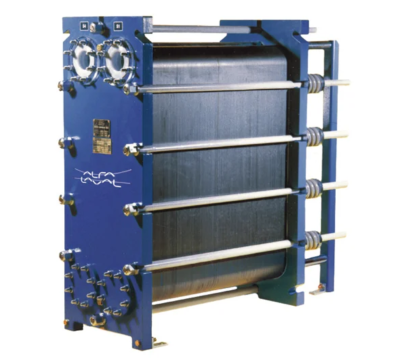

Alfa Laval Diabon™ graphite plate heat exchangers combine the high-efficiency heat transfer of a compact plate-and-frame design with the exceptional corrosion resistance of graphite — specifically engineered for highly corrosive chemicals that attack metallic alloys, glass and Teflon. Developed jointly with SGL Carbon, Diabon plates are available in three graphite grades (F100, NS1, NS2) and sealed with PTFE rope gaskets resistant to virtually all known chemicals at temperatures above 180 °C. The result is a reliable, low-maintenance solution that outperforms traditional graphite block and shell-and-tube exchangers in corrosive service.
Need a quote or technical advice?
▸ Key Features
- Exceptional corrosion resistance — handles hydrochloric acid (all concentrations), sulphuric acid (up to 90%), hydrofluoric acid (up to 60%), phosphoric acid, pickling acids, mixed acids and chlorinated hydrocarbons
- PTFE rope gasket compressed to ~0.2 mm film — minimal chemical contact area, extremely long service life, resistant to all known chemicals
- Three graphite plate grades: F100 (fluoroplastic-bonded, superior oxidation resistance), NS1 (synthetic resin-impregnated, up to 160 °C), NS2 (extended range, up to 200 °C)
- Spring-loaded tightening bolts compensate for thermal expansion differences between carbon steel frame and graphite plates — minimizes risk of plate cracking
- Corrugated plate pattern promotes turbulence for high heat transfer and low fouling — F100 smooth non-porous surface has additional anti-adhesive properties
- PTFE-lined frame and pressure plates protect against corrosive media
- Compact plate-and-frame design — significantly lower capital and maintenance cost than graphite block exchangers
- Easy access for inspection and cleaning; plates individually replaceable
▸ Graphite Plate Grades
▸ Technical Specifications
▸ Compatible Media
- Hydrochloric acid and HCl gas — all concentrations
- Sulphuric acid — up to 90% concentration
- Hydrofluoric acid — up to 60% concentration
- Phosphoric acid — all concentrations
- Nitric acid and HNO₃/HF pickling mixtures (F100 grade)
- Mixed acids and chlorinated hydrocarbons
- Mining electrolytes
- Catalysts such as aluminium chloride
▸ Applications
- Chemical industry — acid production, acid cooling, reaction heat removal
- Copper smelting — acid plant cooling (weak and strong sulphuric acid)
- Steel and metals — stainless steel pickling lines (HNO₃/HF mixtures), carbon steel pickling
- Surface treatment and galvanizing plants
- Pharmaceutical production with corrosive intermediates
- Fertilizer manufacturing (phosphoric acid, sulphuric acid duties)
- Mining — electrolyte cooling in electrowinning and electrorefining
- Heaters, coolers, interchangers, condensers and evaporators for any highly corrosive media